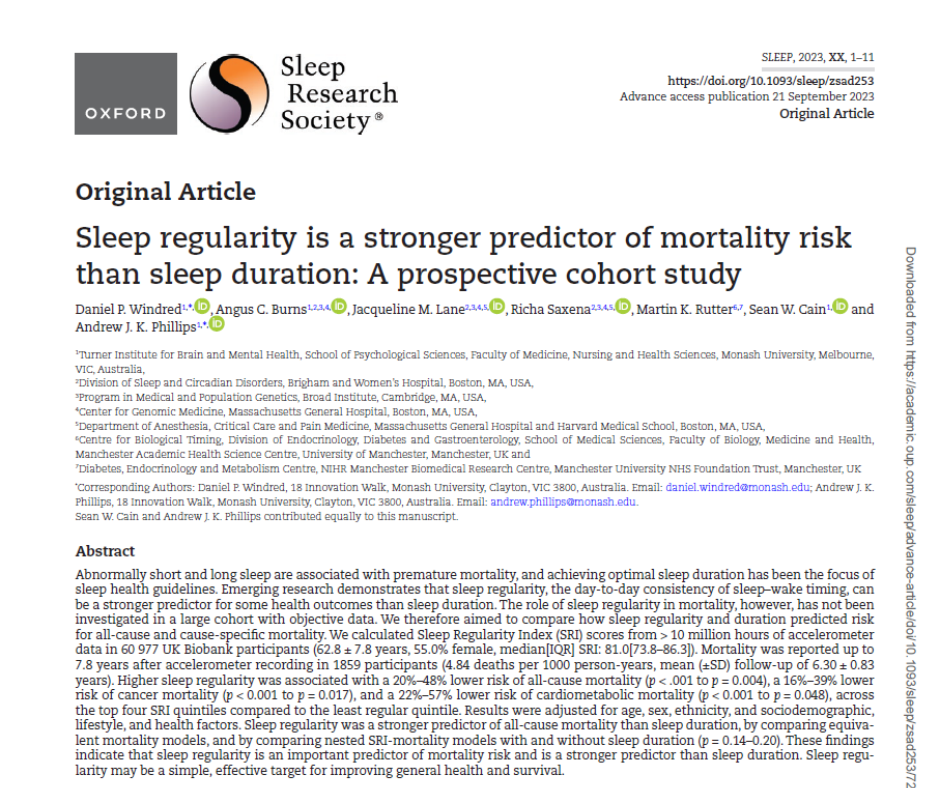


Sleep regularity is a stronger predictor of mortality risk than sleep duration: A prospective cohort study
Sleep regularity, the day-to-day consistency of sleep–wake timing, can be a stronger predictor for some health outcomes than sleep duration.
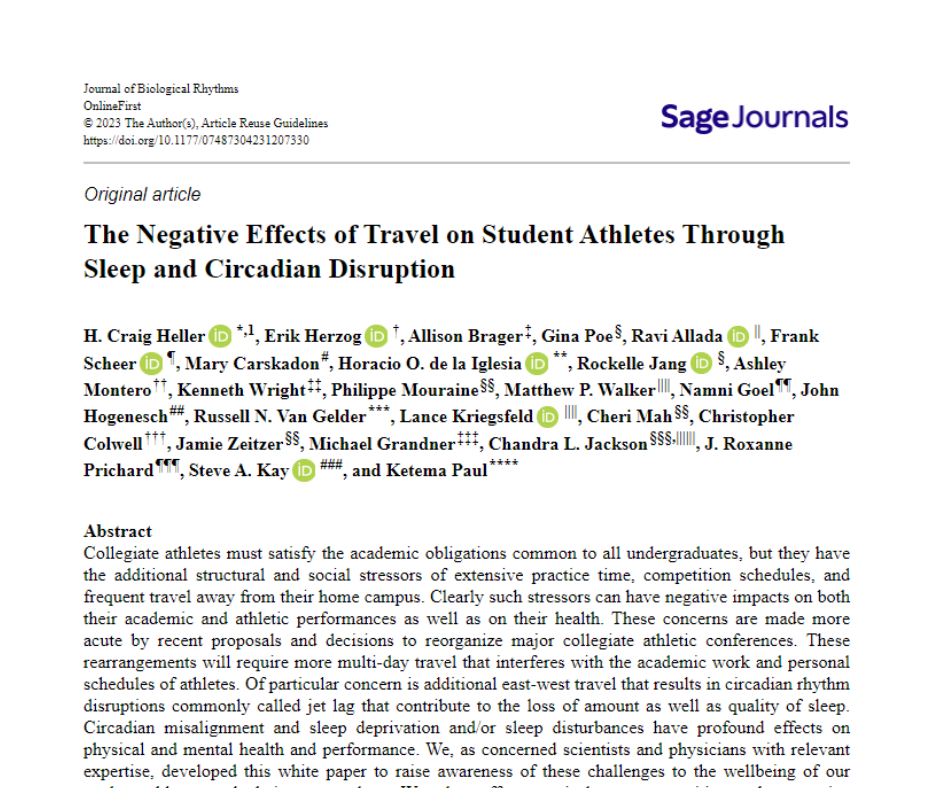
Travel can cause misalignment of internal rhythms, resulting in lower performance, reduced cognition, poor memory storage, and poor emotional regulation.
Lack of daylight can lead to problems with the liver and gut.
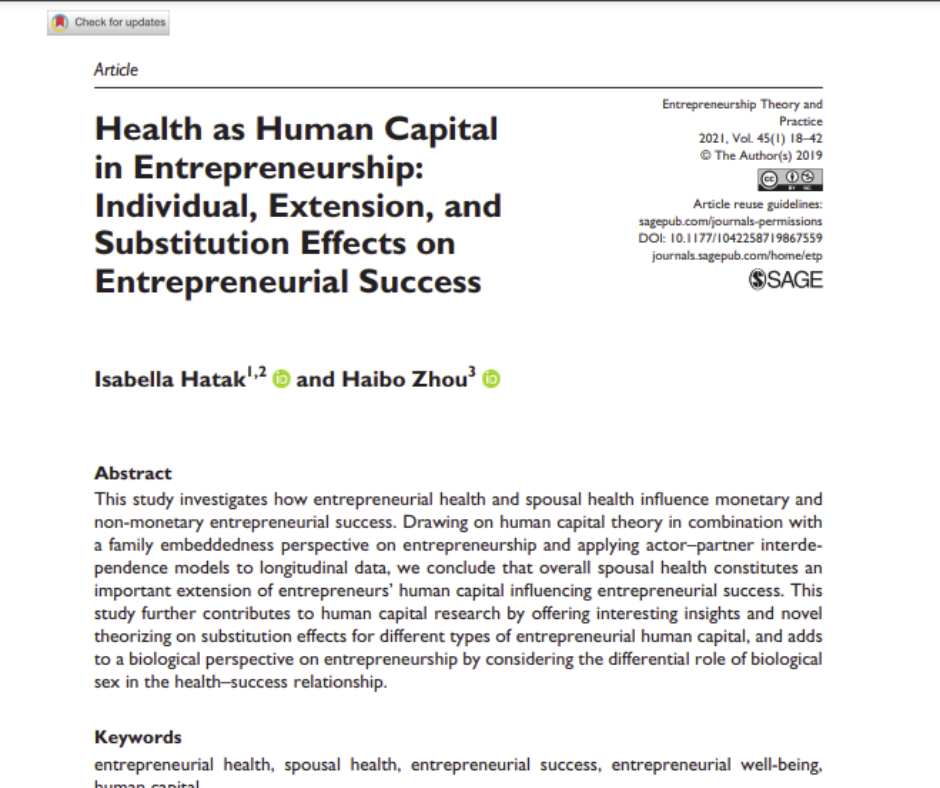
An entrepreneur’s physical & mental health, along with the physical & mental health of their spouse, impacts the chance of startup success.
Reduced daytime light exposure was associated with increased sleep-wake fragmentation. Afternoon light therapy might be more efficient in consolidating sleep and wake in older adults.
High strain exercise / sports late at night interrupts sleep.
Is the afternoon the best time to exercise?
This large study has 2 important findings:
This paper shows that the brain’s Default Network is causally linked to creative thinking….
LED lights have potential drawbacks on human health, particularly sleep quality, mood, productivity and long-term health effects.
Managers spend 50% of their time in meetings. This article by Ethan Mollick shares evidence-based ideas on how to improve them.